Longer runs
How to Score Higher in 2048: Stop Spending Your Empty Cells
A practical way to recognize a run that can still be saved
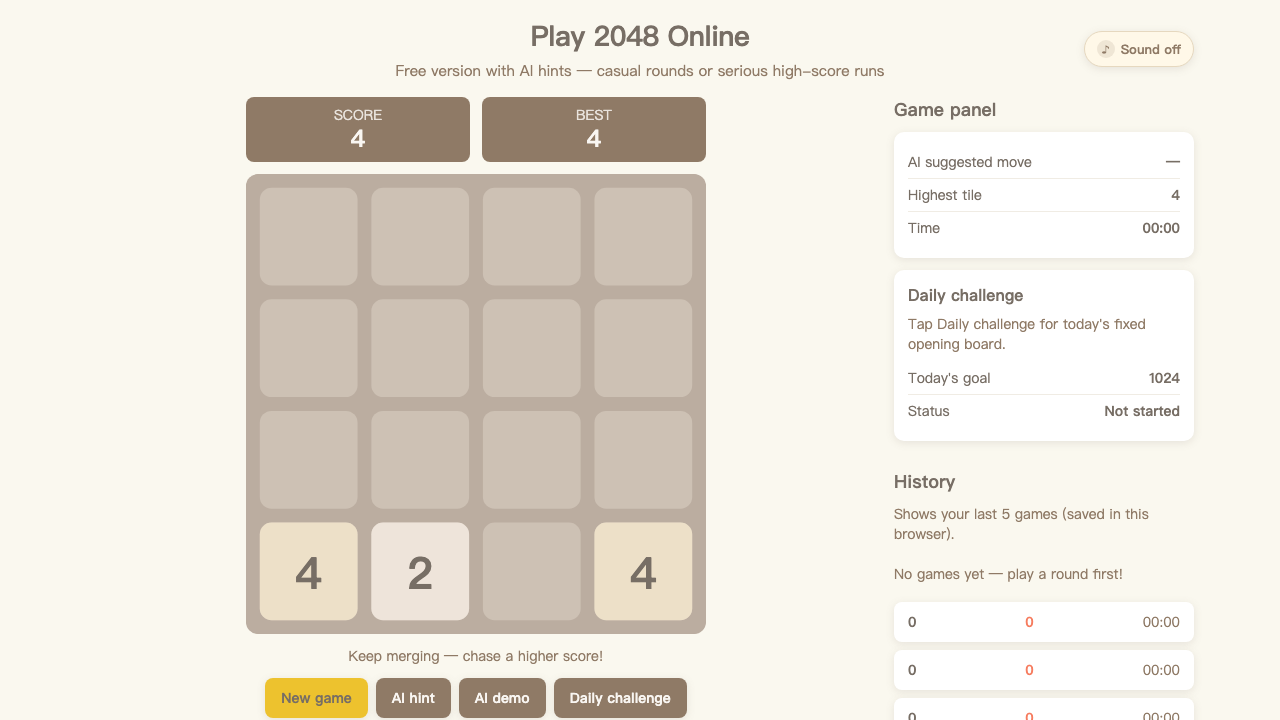
Most 2048 runs do not end because you missed a brilliant merge. They end because the board became full before you noticed it was becoming full. High scores come from preserving choices: empty squares, neighboring equal tiles, and one edge that remains orderly enough to rebuild after a messy turn.
Treat empty cells like time, not decoration
An empty square gives a new tile somewhere harmless to land. Several empty squares give you a choice when the next spawn is inconvenient. When you make a small merge that fills your last open area but does not improve your main edge, you may have gained points while losing the run.
Score is a result, not the steering wheel
The score rises whenever tiles merge, so it is tempting to choose the move with the largest immediate merge. But a 128 that joins the wrong side can leave your 512 isolated. Prefer moves that leave the next two or three merges visible. Your score will follow if the board remains organized.
A short reset checklist before every risky swipe
- Where will the largest tile be after this move?
- Will the edge beside it still descend, or will a smaller tile block it?
- How many empty cells remain after the new 2 or 4 appears?
- Am I taking this move for board shape, or only because it makes a satisfying merge now?
Use undo to review, not to flatter your score
One-step undo is most useful immediately after a board changes shape in a way you did not expect. Undo, then try the alternative direction and compare the number of open cells and the location of the largest tile. Over a few runs, you start spotting that difference before you need the button.
Practice one decision at a time
The daily challenge is useful because everyone starts from the same opening that day. Run it once aiming only to keep the corner. Run it again aiming only to protect empty cells. The comparison gives you a more useful lesson than restarting random boards until one happens to go well.
Start a run on the 2048 game, or revisit the rules and first habits when the basics need a reset.